
"What did you do at kindergarten today?" "I played!" An answer that worries some parents: does my child spend the whole day just playing? The truth, confirmed by early childhood experts, is that play is how young children learn, and at this age it is serious work as much as it is fun.
Why do children learn through play?
Children between two and six do not learn well by sitting still for long and memorising. They learn by doing: they touch, build, knock down and try again. When they play, they are focused, eager and ready to try without fear of getting it wrong. That is why the American Academy of Pediatrics considers play a basic need for a child's development, not a luxury.
What does your child learn from each kind of play?
- Blocks and building: counting, sizes, balance and planning, and patience when the tower falls and they build it again.
- Pretend play (shopkeeper, doctor, teacher): new words, understanding how others feel, and practising conversation.
- Colouring, drawing and play dough: strengthening small hand muscles ready for writing, and expressing ideas and feelings.
- Running, jumping and ball games: a growing body, better balance and focus, and a healthy way to let off energy.
- Group games: waiting for a turn, following rules, accepting losing, and solving disagreements with words.
Practical steps: how to turn play at home into learning
- Set aside a quarter of an hour a day to play together, phone away: get down to their level, let them choose and lead the game, and be the "customer" in their shop or the "patient" in their clinic.
- Use what you have at home: cardboard boxes become a house or a car, plastic containers a kitchen, and large bottle caps a tool for counting and sorting colours. (Always make sure pieces are too big to swallow.)
- Talk while you play: "How many blocks have we stacked? Which one is taller? What happens if we put this on top of that?" This is how play turns into maths, language and thinking.
- Don't correct everything: if they paint the sun blue, that is fine. Imagination is part of learning; what matters is that they try and enjoy it.
- Make screens the exception, not the rule: short, set times, ideally watching together, while leaving plenty of time for hands-on play and movement.
Play in our day at Olive Branch
Our day is built on this idea: we learn a lot, but in the way children love:
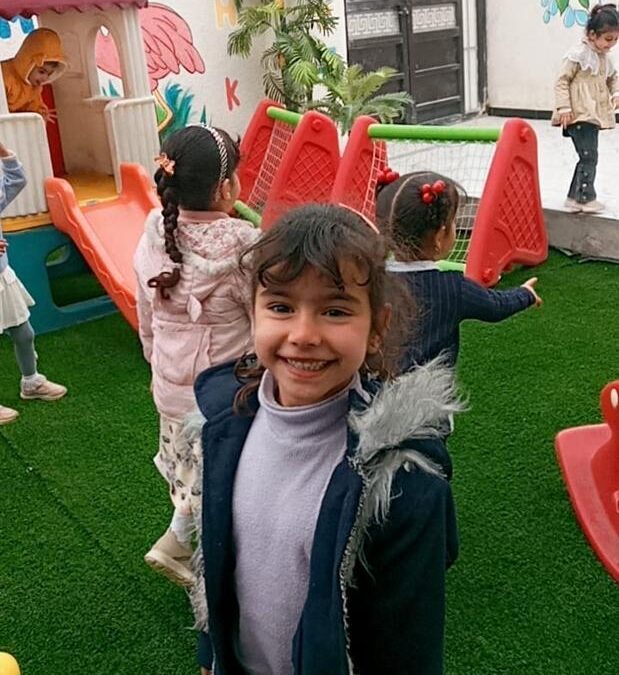
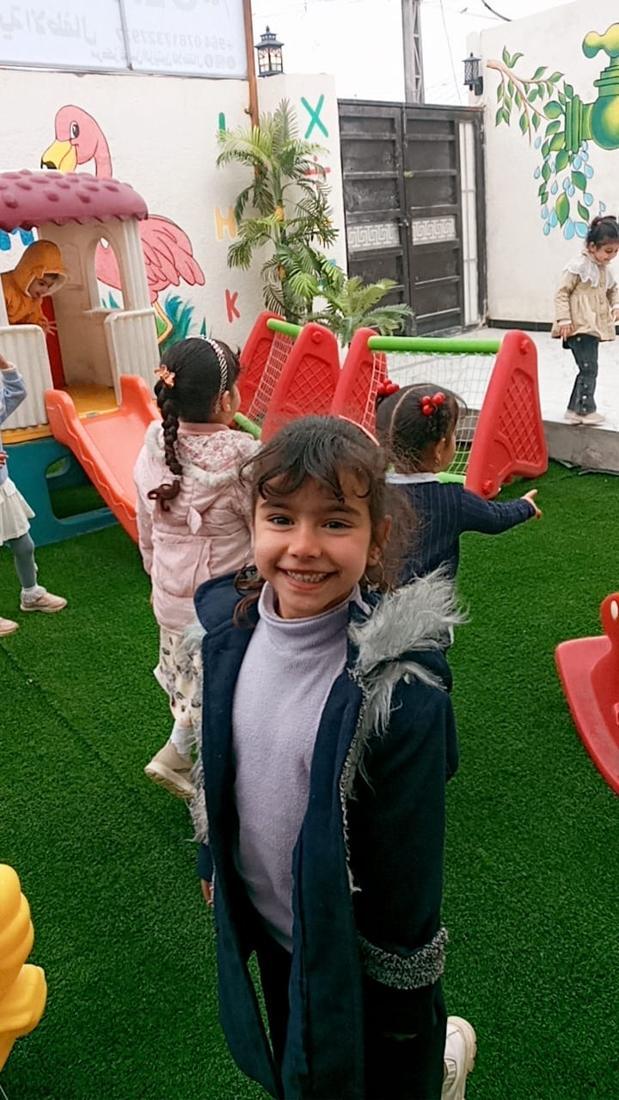
- Playground time and sports activities every day, for a growing body and better focus.
- Maths with blocks and counting, and reading with letter cards and picture stories.
- Art, colouring and story-based art, to strengthen little hands and spark imagination.
- A movement, speech and communication programme for children with special needs, built on guided play.
And we share with you what your child is learning, so you can continue the same play at home, because a child who enjoys learning today will love school tomorrow.
A final word
Next time your child tells you "I played today", smile and ask: "What did you play? What did you build?" You will discover a small lesson behind every game, and that the best thing you can give them is to play with them.
Would you like to see how children play and learn with us? Visit us on Al-Nile Street in Nasiriyah, or message us on WhatsApp and we will arrange a visit for you.
Source: American Academy of Pediatrics — "The Power of Play: A Pediatric Role in Enhancing Development in Young Children" (2018).